Knowing how to write a resume in 2026 means creating a document that showcases your unique value, filters smoothly through AI-driven screening tools, and signals your expertise in a way that captures attention in seconds. In a market defined by relentless competition, your resume isn’t just a summary—it’s your first pitch, your digital handshake, and sometimes your only shot at standing out.
Here’s the uncomfortable truth: even top-tier founders and seasoned content marketers get ignored because their resumes blend into a sea of sameness. You’ve built companies, shipped products, and carved out a name in fast-paced industries like SaaS and professional services. Yet, every time you stare at that empty document or the blinking cursor, the question returns—how do you capture the depth and breadth of your experience without sounding generic or getting buried by automated filters?
Sixty-eight percent of resumes submitted online never make it past initial digital screening. Algorithms judge your career journey before a human ever sees it—and they’re scanning for more than just the “right” keywords. They’re parsing context, quantifiable outcomes, and the subtle signals that separate an industry leader from another “growth-oriented professional.” Now, more than ever, you need a resume that doesn’t just tick compliance boxes, but tells a clear, compelling story aimed at your next big move.
This guide exists because you shouldn’t have to choose between authenticity and algorithm-optimization. You’ll learn the bones of a modern resume, how to tailor it for the nuanced expectations of your industry, and how action-driven language and concrete results make all the difference. You’ll also see what’s changed—dramatically—in how AI screens and scores profiles, so your next iteration is as future-proof as your business vision.
Ready to rethink how you present your career—so algorithms and decision-makers finally see what you’re truly capable of? Let’s dig into why your resume is more critical now than ever before.
Why Your Resume Matters More Than Ever in 2026
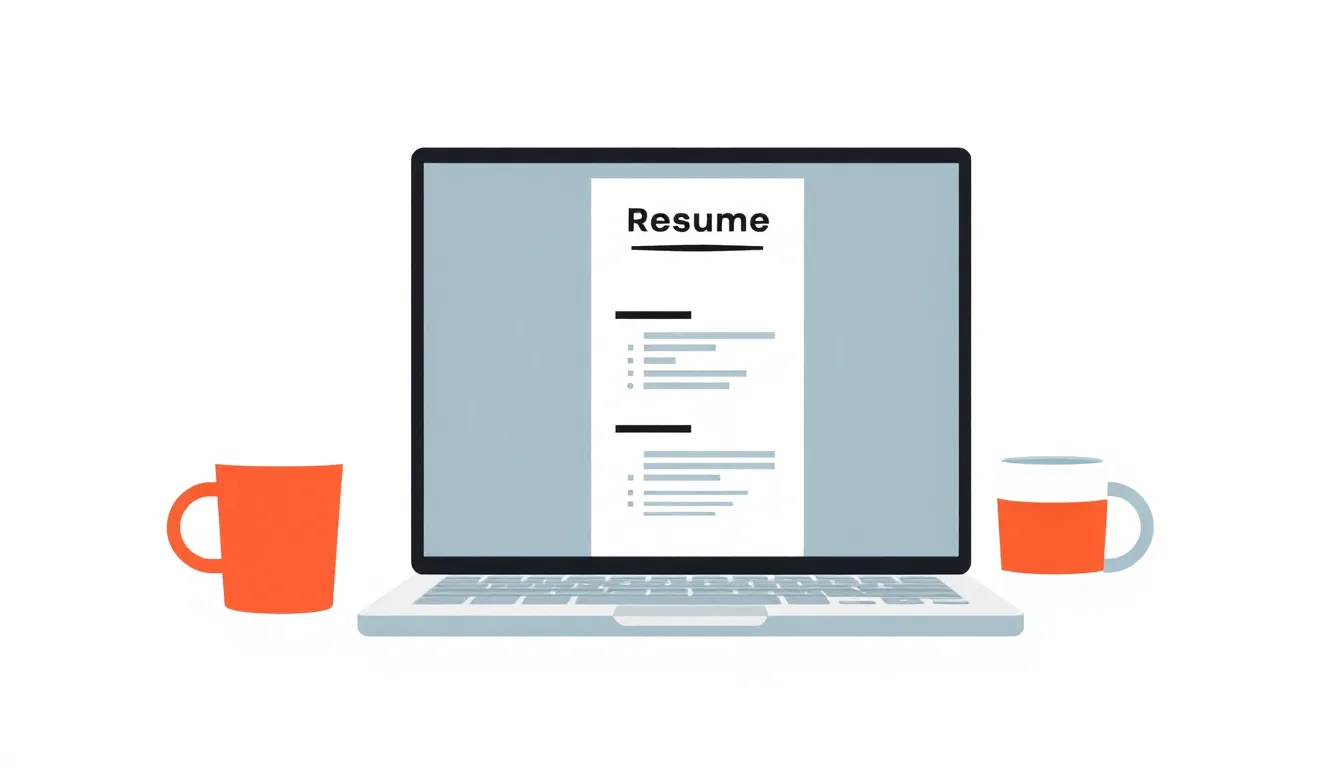
The job market in 2026 is a relentless playground—anyone looking for new opportunities can’t afford to show up with a dusty, generic resume. Today’s hiring landscape isn’t just competitive; it’s brutally selective. Over 75% of hiring managers use Applicant Tracking Systems (ATS) to filter resumes before a human even looks at them [careerservices.fas.harvard.edu]. If your resume isn’t optimized for these algorithms, it might as well be invisible.
The game has changed. You need more than a decent list of jobs and skills. A strong, tailored resume gives you a 40% higher shot at landing that all-important interview. Those odds aren’t theoretical—actual companies are running real experiments with side-by-side candidate pools and seeing who gets callbacks [indeed.com].
Generic vs. Tailored Resumes: What’s the Real Difference?
Here’s what happens when you send the same copy-paste resume everywhere: you look just like 90% of the job-seekers who never hear back. Take a look at two fake—but painfully real—examples for a Tech Startup Product Manager role:
Generic Resume Excerpt
“Responsible for leading teams and delivering projects. Familiar with product development. Experienced in using project management tools.”
Tailored Resume Excerpt
“Led a 6-person cross-functional team at SaaS startup that boosted feature release cadence by 30% using agile Kanban systems. Drove roll-out of AI-powered reporting tool adopted by over 5,000 users within the first quarter.”
That’s night and day. The tailored version screams relevance, quantifies impact, and name-drops methodologies that tech founders love. The generic one could be from 2014—or for a completely different role.
Why “Good Enough” Isn’t Enough Anymore
Blame the sheer volume of applicants, or the improved tech on the recruiter’s side—either way, you’ll get lost fast if you wing your resume. Applicant Tracking Systems scan for specific keywords and phrasing tied to each job description. Miss enough of those, and your application auto-hits the trash before a hiring manager ever sees it.
And if you’re aiming for technology, SaaS, or professional services? The standards are even higher. These sectors now favor clean, data-driven resumes with results spelled out in numbers, not generic duties.
How to Audit Your Resume for 2026
Want a resume that survives both robots and humans? Here’s your hit-list:
- Scan for Keyword Alignment: Copy a current job posting and check your resume for exact matches (think “Python”, “B2B SaaS”, “growth experiments”).
- Verify Format Consistency: ATS bots are picky. Stick to clear sections, logical order, and standard headings like “Experience” and “Education”. Fancy fonts or odd layouts get scrambled.
- Quantify Everything: Quantified results (“increased ARR by $400k”, “cut churn 19% year-over-year”) pack way more punch than vague phrases.
- Cut the Fluff: Ditch words like “motivated” and “hard-working”; no one’s buying it.
- Check for Modernity: List current tech, frameworks, and practices. Citing outdated tools can sink your credibility instantly [help.usajobs.gov].
"Always assume a real person will only give your resume five seconds, but a robot will judge it in less than one." That’s the brutal reality in 2026.
What Are the Essential Components of a Modern Resume?
Picture this: you know you’ve got the skills—a SaaS founder, a sharp marketer, or a consultant with real achievements. But the perfect job slips through your fingers. Why? A resume that just doesn’t deliver. In 2026, there’s zero room for guesswork. Today’s hiring managers cut through hundreds of resumes using sophisticated tech, and their attention spans don’t linger. If your document isn’t instantly readable and hitting the right notes, you’re gone before you ever enter the race.
What sections must every modern resume include?
Every effective resume in 2026 boils down to a few core elements—miss one and you’ll look like you’re stuck in the past. You need: clear contact information, a tailored professional summary, focused work experience, education credentials, and a scannable skills section. Ignore the fluff. Maximize these essentials and hiring managers actually find what matters—not another wall of text.
The bottom line: If your resume lacks a bold, clear professional summary right at the top, you’re losing serious ground. A recent industry report confirms that 85% of recruiters prefer resumes with a summary front-and-center—it’s your one shot to frame your story in seconds [source].
How do modern resumes beat out the old-school approach?
Traditional resumes were a factual slog—lengthy career objectives, walls of job duties, and education buried somewhere near the bottom. You’d see multi-page autobiographies jammed with irrelevant details. That’s a non-starter in 2026.
Modern resumes, on the other hand, flip the script:
- Professional summary lands at the top, distilling your value in two to three sentences. No weak “objective” statements from 2002—a real snapshot of your unique selling points.
- Work experience comes alive: It’s not a list of tasks. Each bullet points to an outcome. “Increased inbound leads by 45% over six months” is what wins interviews—not “managed email campaigns.”
- Education is lean but visible: Degrees, dates, and relevant coursework get mentioned, but you don’t waste space if you’ve got real work wins.
- Skills aren’t generic buzzwords: Nobody cares that you’re a “team player.” Instead, spotlight specific hard skills—data analysis, Python, Salesforce, LinkedIn competitor benchmarking.
Recruiters spend an average of 7.4 seconds on the first skim [source]. That means clarity trumps completeness every single time.
Why is the professional summary non-negotiable?
Think of the professional summary as your “elevator pitch”—but on paper. In a world where 78% of recruiters still say the resume is the number one factor for an interview invite [source], burying your story is a fatal error. Your summary should be ruthlessly concise and customized for the target role. For a founder, that means quantifiable startup wins. For a marketer, revenue impact or campaign ROI.
Far too many people waste prime space with meaningless objectives (“Seeking a challenging position to use my skills...”). No one wants to read that. What you need: “SaaS founder with 10+ years scaling B2B platforms to $5M ARR; expert in GTM strategy and remote team leadership.”
How should you present work experience and education for max impact?
Your employment history lives or dies by what you highlight. Job titles and dates matter, but substance rules—did you drive adoption, close deals, launch new products? Show outcomes. If you’re pivoting careers or jumping industries, plug quantifiable achievements that translate anywhere (growth rates, lead conversion, churn reduction).
Education shouldn’t be a graveyard for old certificates. Zero in on degrees earned, key projects, and dates. Unless you’re a recent grad, let your work speak louder than your alma mater.
What about templates and presentation?
Don’t overcomplicate this. Use a modern template with distinct sections and lots of white space. Employers expect sleek, clean formatting—they’re not reading War and Peace. Consistent headings, bullet points, and a readable font win every time [source]. Skip headshots, ornate graphics, or “creative” flourishes unless you’re in a design-centric field.
How to Tailor Your Resume for Different Industries
Recruiters blitz through resumes at warp speed—an eye-tracking study in 2024 pegged the first scan at just 6.4 seconds [source]. If your skills, keywords, and results don't match the industry’s playbook almost instantly, your resume gets skipped. Tailoring your resume for each industry isn’t just smart; it’s essential if you want more interviews in 2026.
What does it mean to tailor your resume?
Tailoring your resume means strategically reshaping your experience, skills, and achievements so they map exactly to what's valued in the target industry. You aren't rewriting your history. You're rewriting how your story is told.
If you’re gunning for a SaaS marketing gig, that 2023 retail sales trophy means nothing until you translate it into metrics a SaaS hiring manager cares about—think digital campaign ROI, pipeline acceleration, or user growth, not just “customer service excellence.”
Case Study: From Generalist Marketing Resume to SaaS Standout
Picture this: Jane, seasoned marketer, tries (and fails) to break into SaaS. Her original resume? Generic. Every company sounds the same. No SaaS-specific lingo—just a long list of marketing duties.
Now, here’s how her resume transformed:
- Original: “Managed social media campaigns across channels, growing brand engagement.”
- Tailored: “Drove 22% growth in SaaS product signups through targeted multi-channel campaigns on LinkedIn and Twitter. Implemented A/B testing to boost lead conversion rate from 8% to 13%.”
Now Jane’s results scream SaaS. For her next application, she lands two final round interviews—proof that translating general skills into industry-speak actually works.
Tech vs Professional Services vs SaaS: What Recruiters Want — Table
Resumes don’t get read the same way everywhere. Here’s a side-by-side snapshot of what actually matters for three ultra-competitive sectors:
| Section | Tech | SaaS | Professional Services |
|---|---|---|---|
| Keywords | Java, APIs, Agile, DevOps | MRR, Churn, CAC, Product-Led | Client Relations, Risk, Audit |
| Metrics | Uptime %, Latency, Sprints | Signups, LTV, ARR, Activation Rate | Billable Hours, Net Promoter |
| Soft Skills | Problem-solving, Adaptability | Growth Mindset, Velocity | Communication, Stakeholder Mgmt |
| Achievements | Patents, Open Source, Scaling | User Growth, Revenue Milestones | Client Retention, Project Savings |
Want interviews? Speak the language shown above. The keywords you pick should echo the job ad—those are what hiring managers and bots both look for.
How do you identify the right industry-specific keywords?
You find industry buzzwords by studying:
- Job Descriptions: Grab 3-5 listings for your target role. Highlight recurring terms—those are gold.
- Professional Groups & LinkedIn Profiles: Check how top performers describe what they do.
- Industry Reports and Blogs: They’re packed with current lingo and expectations.
Jot these keywords down, then sprinkle them into:
- Your summary
- Each job title and description
- Skills section
But don’t just jam them in—prove you’ve done the work behind every buzzword. If you list “Product-Led Growth,” show a stat or achievement attached to it.
Does formatting matter when tailoring for different industries?
Absolutely. Tech likes compact, results-first formats—quantified, dense, not wordy. Professional services? More formal and structured, with training and degrees front-and-center. SaaS wants numbers, experimentation, rapid-fire results. Don’t use the same template everywhere.
The Power of Action Verbs and Quantifiable Achievements
Why do some resumes land interviews in tech while others get ghosted in professional services? It isn’t just the name on the paper. Action verbs and clear, quantifiable achievements are what set truly competitive resumes apart—across any industry.
Action verbs inject energy and professionalism, transforming boring job descriptions into proof of impact. Phrases like “was responsible for team projects” make a reader’s eyes glaze over. “Launched cross-functional initiatives that increased onboarding speed by 20%” stops them cold.
Action verbs are dynamic words that clearly describe what you actually did. Words like “orchestrated,” “engineered,” “negotiated,” and “accelerated” carry far more weight than “assisted,” “helped,” or “supported.”
But action words alone aren’t enough. Quantifiable achievements change everything. Hiring managers aren’t searching for vague claims—they want receipts. Quantifiable achievements are concrete results or changes (numbers, percentages, growth, savings) credited directly to your work.
According to a 2025 CareerBuilder study, resumes with quantifiable results are 30% more likely to capture an employer’s attention. That’s not a rounding error—those numbers can mean the difference between “let’s interview” and “delete.”
Here’s how it plays out:
What’s the Difference? Passive vs. Active Resume Language
Passive resumes drown in generic duties. Active, achievement-driven resumes highlight measurable impact.
| Passive Description | Active, Quantified Rewrite |
|---|---|
| Responsible for managing client accounts | Managed 30+ client accounts, growing book value by $2M |
| Helped with product launches | Spearheaded 5 product launches, increasing sales by 40% |
| Assisted in project delivery | Delivered 12 SaaS projects under budget and deadline |
| Worked on marketing campaigns | Led campaigns generating 25,000+ new qualified leads |
Ready to level up your resume? Here’s how you overhaul your experience section for maximum impact.
Start by hunting for generic verbs like “helped,” “participated,” or “supported.” Swap every single one for a high-impact action verb. Then—this is the kicker—anchor each accomplishment with real outcomes or hard numbers. If you cut costs, by how much? If you improved efficiency, what was the time saved?
Take this real example:
“Supported digital marketing campaigns for SaaS products.”
Upgrade it:
“Developed and optimized paid campaigns for three SaaS clients, lowering CAC by 18% in six months.”
That’s not just wordsmithing. That’s showing you drive value.
Why Employers Gravitate Toward Measurable Results
It’s not just HR buzzwords. Employers in 2026 are overwhelmed with applications, and most say they barely skim half the pile. Numbers and results do the heavy lifting, proving your credibility without making busy managers guess at your actual skills.
A hiring manager reading “reduced churn by 5% in Q3” can immediately understand impact—no interpretation required. In industries like tech and SaaS, quantifiable wins are the language of business.
And it’s not just about impressing human eyes. Applicant tracking systems (ATS) increasingly flag measurable achievements as high-value content. More numbers, more interviews.
Key takeaway: Every work experience entry should lead with an action verb and close with a quantifiable result.
Take Action: Quantify at Least Three Achievements
If you only do one thing after this, go straight to your work history section and pick the weakest three lines. Make them stronger—swap in real numbers, growth percentages, or dollar amounts. Don’t pad, don’t exaggerate, just pick honest highlights where you genuinely moved the needle.
If you’re struggling to remember those milestones, dig through old dashboards, performance reviews, or project recaps. Tools like LinkPilot make it easier to track and showcase your LinkedIn wins, pulling real data for resumes and online profiles.
Top resumes don’t tell stories, they show proof. Your job isn’t on the line—your proof is.
If you need even more inspiration (or a sanity check), check out Harvard's resume building resources. There’s no shortage of modern examples that get results.
Filling your resume with energetic, measurable achievements isn’t an optional upgrade. In 2026, it’s a competitive necessity.
How Does AI Influence Resume Screening in 2026?
AI-driven resume screening is the new gatekeeper between talent and opportunity—98% of Fortune 500 companies now rely on applicant tracking systems (ATS) powered by advanced AI. That means, before a recruiter even skims your LinkedIn, there’s a good chance a machine has already ranked, filtered, or rejected your application.
Here's what’s happening behind the curtain: AI tools scan resumes with relentless precision for keywords, structure, and relevance to the job description. The goal? Find matches that look like a strong fit on paper—fast.
Take this before-and-after transformation:
Before: “Responsible for managing client accounts.”
After: “Managed 45+ SaaS enterprise accounts, increasing client retention by 28% year-over-year.”
The difference isn’t just flair. The second bullet will surface in searches for “account management,” “client retention,” “SaaS,” and quantifiable impact—a magnet for both recruiters and today’s AI bots.
What’s Different: AI Screening vs. Traditional Resume Review
AI resume screening is software-driven, rules-based, and brutally efficient. Resumes are parsed and ranked in milliseconds based on keyword relevance, formatting conformity, and even syntactic clarity (yes, extra spaces and weird fonts can throw it off).
Traditional screening? It relies on a human with a pile of printouts, scanning for obvious skills and big names, sometimes skimming for less than 10 seconds. If a junior reviewer’s eyes glaze over halfway through page one, your details get missed.
Why Resumes Fall Through the Cracks with AI
There are a few reasons resumes land in the “auto-reject” pile—none of which have anything to do with your true ability:
- Lack of relevant keywords: If the job asks for “Python” and your resume says “advanced scripting languages,” the AI might not connect the dots.
- Non-standard formatting: Columns, tables, non-traditional fonts, or graphics can foil parsing algorithms, leaving data unread or miscategorized.
- Missing essential sections: The absence of a summary, logical work chronology, or unlabelled job titles can tank your ATS score.
- Overly generic language: Phrases like “responsible for” or “helped with” don’t translate into searchable impact.
How to Optimize Your Resume for AI in 2026
Here’s what works:
- Mirror the job description. If the posting says “lead generation using Salesforce,” that exact phrase should appear, where true, in your bullet points or skills section.
- Use standard section titles. Stick to “Work Experience,” “Skills,” “Education”—avoid clever headings.
- Choose ATS-friendly formats. Save your file as a .docx or PDF (if the system allows) and stick to basic, professional fonts.
- Avoid text boxes, tables, or graphics. These are notorious for breaking AI parsers. Keep your resume layout clean and linear.
- Test before sending. Run your resume through free online ATS simulators and keyword scanners to gauge compatibility. Sites like indeed.com and careerservices.fas.harvard.edu offer sample templates and checking tools.
Bottom Line
AI isn’t looking for clever wording or fancy design—it wants evidence you meet the job criteria, parsed in a format it can read. Resumes with quantifiable results—“grew sales pipeline 33%” instead of “supported sales”—aren’t just 40% more likely to get interview callbacks, they’re also far more likely to survive the AI gauntlet (source).
If your resume slips past the robots, you’re suddenly ahead of most of the competition—ready for a real shot at making your story resonate with an actual human.
Crafting a Forward-Looking Resume: Preparing for Future Opportunities
By 2026, 92% of Fortune 500 companies rely on AI-powered applicant tracking systems to screen resumes. If your resume speaks only to your past, it's missing half the point. These days, adaptability and future potential matter as much as your track record.
A forward-looking resume showcases where you’re headed—not just where you’ve been. AI bots and human recruiters alike zero in on signals that you’re proactive, growth-minded, and at home in fast-changing industries.
What Is a Forward-Looking Resume?
A forward-looking resume highlights not only past roles and wins, but also your ability to adapt, learn, and drive impact in new environments. Instead of a static history log, you’re painting a picture of untapped potential.
Bottom line: A future-proof resume is like your career’s elevator pitch to tomorrow’s opportunities, not just a summary of yesterday’s highlights.
How Do You Build a Resume That Prepares for Future Roles?
Start with these essentials:
- Showcase Professional Development
- Certifications, ongoing courses, and workshops signal you’re actively leveling up. Whether it’s a new SaaS credential or an AI bootcamp, list these near the top of your resume.
- Include a ‘Career Objective’ or ‘Future Goals’ Section
- Don’t just state you’re “seeking new challenges.” Be specific about your direction—what role, niche, or expertise you’re targeting next.
- Emphasize Transferable Skills
- Highlight abilities that move across disciplines: project leadership, CRMs, data analysis, growth marketing. AI crawlers flag these as high-value.
- Integrate Industry Trends
- Refer directly to technologies or methodologies set to shape your field. In SaaS, mentioning “product-led growth,” “AI deployment,” or “predictive analytics” demonstrates savvy.
Example: From Content Marketing to Product Management, Step by Step
Here’s how one professional made the leap:
| Previous Role | Resume Update for Future Roles |
|---|---|
| Content Marketing Specialist | Added “Collaborated with product and engineering teams to shape go-to-market strategy” |
| Led blog and social channels | Highlighted “A/B tested user onboarding experiences, reduced churn by 18%” |
| No formal product management experience | Completed Coursera’s SaaS Product Management certificate (2025) |
| General summary at top (“results-driven”) | Objective updated to: “Seeking entry-level product manager roles in SaaS” |
What stands out here? Every line connects back to product management—skills, results, and growth show up all over.
Key Resume Additions for 2026 and Beyond
If you’re planning to leap into a new area (say, sales to customer success, or content to martech), structure your resume to signal readiness. Here’s what to add:
- Professional Development
- Example: “Certified SaaS Product Manager – Coursera 2025”
- Future Goals
- Example: “Eager to join a scaling tech firm as an Associate PM, leveraging data-driven insights.”
- Relevant Volunteering or Side Projects
- Example: “Built a Notion-based CRM template used by 200+ solopreneurs.”
- Tech and Trend Awareness
- Mention AI tools, channel automation, or analytics you excel with.
Why Your Resume Needs to Echo Industry Trends
Emerging trends have always shaped hiring, but now AI makes it explicit—if top keywords and current frameworks are missing from your document, you’ll never hit a human inbox. By tracking industry forums and job postings, you’ll spot what’s hot before it’s obvious. Want proof? Harvard's career service recommends updating resumes to reflect “ongoing training and evolving skills” specifically for fast-moving sectors.
Action Steps: Make Your Resume Future-Proof
- Update quarterly: Don’t wait for a job hunt; add training, side projects, and keywords as they happen.
- Add a “Professional Development & Growth” section: Place just below your experience.
- Tailor your ‘objective’ to the next 12-24 months: Vagueness is a red flag.
- Cross-match skills with job listings: Scan top postings for your target role, and plug those terms in naturally.
Key takeaway: The resume that lands interviews in 2026 is the one that anticipates—not reacts to—the next move.
If you want to take this strategy up a notch, tools like LinkPilot can help identify which future-ready skills and keywords are trending on LinkedIn, so your resume never lags behind industry shifts.
The old “set it and forget it” resume is dead. The smartest candidates are already crafting dynamic, forward-facing resumes that open doors before they even knock.
Ready to Stand Out?
Mastering how to write a resume in 2026 means more than listing your experience—it’s about telling a compelling story that aligns with today’s fast-changing job market. The single most actionable takeaway? Customize every resume you send out. Tailor your skills, achievements, and keywords for each industry and employer. This approach ensures you’ll make it through both AI screenings and human eyes. Tools like content writing services can help you polish your resume narrative for maximum impact. Invest the extra effort now, and your next opportunity is already within reach. Your future employers are looking for resumes like yours—make sure they find it.
Using modern resume writing tips can significantly boost your chances of landing interviews by refining structure, language, and keyword use.