Content writing services in 2026 empower founders, entrepreneurs, and content marketers to consistently produce high-quality, strategic content across platforms like LinkedIn, without the overwhelm of daily ideation or manual posting. These services deliver everything from engaging thought leadership pieces to competitive LinkedIn analyses and robust analytics on your profile performance—all tailored to accelerate growth in SaaS, technology, or professional services.
But here’s the gut punch: last year alone, nearly 60% of tech founders abandoned their LinkedIn content calendars by Q2—not for lack of ambition, but because crafting insightful, audience-building posts every week felt impossible alongside running a business. Maybe that sounds familiar. You’re staring at a blank doc, knowing one well-timed post could attract top leads or investors. But the right words won’t come, and even if they do, you have no way to track their impact—or see how you stack up to competitors.
That's where premium content writing services come in, offering not just content but a systematic solution to your biggest LinkedIn headaches: strategic planning, hands-off scheduling, analytics for personal pages, and competitive intelligence you can’t get from basic tools. Imagine refocusing your best energy on innovation and growth, while a reliable partner turns your expertise into viral posts, with insight-driven tweaks and ready-made reports.
This guide arms you with practical know-how—from understanding which content writing services fit your needs, to calculating real costs, and making smarter choices as AI and analytics become pivotal. Ready to trade content chaos for authority and results on LinkedIn? Let’s dive into what sets the best content writing services apart in 2026.
Why Content Writing Services Are Essential in 2026
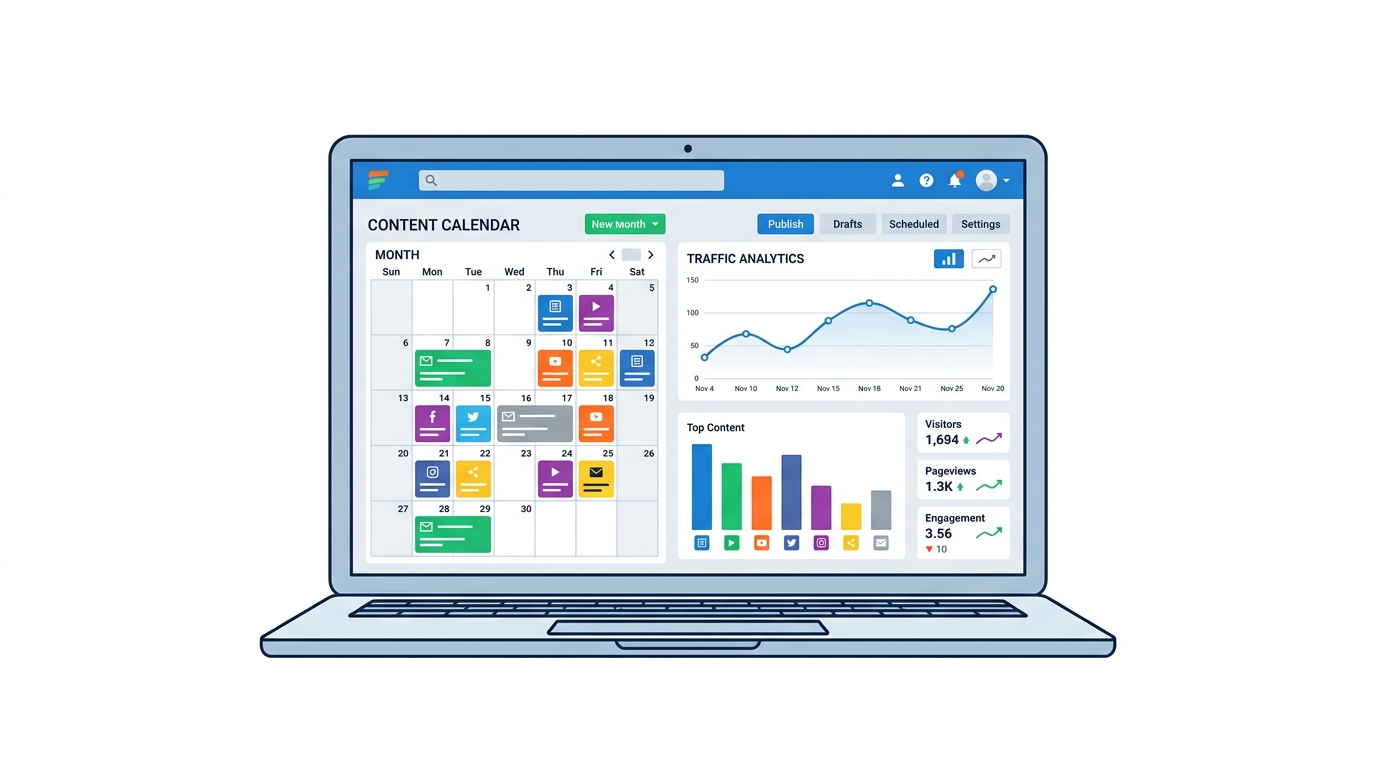
Content writing services are non-negotiable for any business wanting to scale in 2026. Companies investing in professional content consistently outpace competitors—content marketing now generates over three times as many leads as interruptive, old-school tactics, while cutting costs by 62%. That's the difference between an anemic pipeline and a sales engine that delivers.
Ignore content at your peril. Ignore quality content, and you’ll just burn cash on campaigns that never convert.
What is a content writing service?
Content writing services are specialized providers—agencies, freelancers, or in-house teams—that create, optimize, and deliver written assets aligned with business goals. This includes blog posts, website copy, LinkedIn thought leadership, newsletters, guides, and more. You’re not just buying words. You’re buying expertise, topic depth, and a steady drumbeat of fresh value for your audience.
Why professional content is a growth multiplier
Quality content isn’t a branding luxury—it's customer acquisition on autopilot. Search engines (and AI chatbots) reward companies with the best answers, insightful articles, and consistent publishing schedules. Almost 70% of tech buyers in 2026 rely on company-created thought leadership when shortlisting vendors. Average effort? That’s just noise.
Pull up any SaaS growth story and you’ll spot a familiar pattern: outsourced content fuels wild growth. One fast-growing SaaS company wanted more inbound leads. By partnering with professional writers, they increased site sessions by 150% in twelve months and saw demo signups jump 56%. Nobody on their team was pumping out ten expert-level articles each month while also running the business. Outsourcing didn’t just save time—it made explosive growth possible.
Where most teams fall short
Here’s the truth: DIY content is a trap. No consistency. No scalability. Zero fresh perspective. Relying purely on internal teams caps output and depth. Eventually, you’ll miss trends—like AI-driven LinkedIn posts—because you’re stuck editing last month’s explainer or chasing approvals.
How to spot your content gaps
It’s easy to see where outside help will immediately level up your program:
- You hit “publish” less than once per week all quarter
- Your LinkedIn posts flatline with under 1% engagement
- No SEO traction—your best keywords are on page two (or dead)
- Zero time to research or analyze competitors
Evaluate your strategy. Where are you falling short? What could expert writers deliver that your team never has bandwidth for?
In-house vs Freelance vs Agency: What works in 2026?
Each model has pros and cons. Pick what unlocks your goals—not what feels safest.
| Model | Best For | Strengths | Weaknesses |
|---|---|---|---|
| In-House | Brand-heavy work, daily comms | Deep product and brand knowledge | Slow to scale, expensive |
| Freelance Writers | Niche topics, flexibility | Specialized expertise, cost control | Coordination can be messy |
| Agencies | Volume, strategy, scaling | Process, reliability, analytics | Less brand intimacy, $$$ |
Bottom line: Skipping content writing services in 2026 leaves growth stuck on pause. Audit your pipeline and plug those gaps—before competitors do.
For more industry stats, check out this 2026 Content Marketing Report by Content Marketing Institute.
What Are the Different Types of Content Writing Services?

Picture this—a SaaS startup with a killer product, but nobody outside the dev team cares. Their LinkedIn feed is a ghost town, website traffic limps, and support tickets pile up asking questions answered on page 42 of their manual. Too many founders crank out product updates but never get their story told. The solution? Investing in the right content writing services—because creating content isn’t the same as writing words on a page.
Content writing services aren’t one-size-fits-all. Today, 70% of marketing teams invest in everything from blogs to case studies, reflecting the massive appetite for content that sells, informs, and builds trust. In 2026, 92% of businesses agree: high-quality content is the single biggest magnet for inbound leads. But “content” is far from generic—choose the wrong flavor, and you waste budget.
What kinds of content writing services exist?
Content writing services cover everything from punchy social posts to deep-dive technical whitepapers. The big three? Blog writing, copywriting, and technical writing—each solves different problems.
Blog writing drives brand engagement, audience trust, and search visibility. Think of it as your digital voice. Blog writers translate raw expertise or product updates into conversations people care about. To punch above your weight in organic search—or make that LinkedIn profile worth following—consistent, well-researched blog content is key. Founders eager to enhance workflow can explore AI writing assistants to boost efficiency and output quality.
Copywriting is the offense. It’s persuasion and conversion. Great copy grabs attention, triggers emotion, and gets readers to act—subscribe, book a demo, click buy now. Website landing pages, paid ads, email campaigns—all fueled by sharp copywriting. Blog writing builds authority over time; copywriting drives direct results now.
Technical writing is the unsung hero for SaaS, tech, and any product with depth. User manuals, API docs, onboarding flows—the unglamorous stuff that keeps users happy and support queues unclogged. Most startups skimp here, then pay with frustrated customers and overwhelmed support.
Here’s the impact: a tech company with vague, jargon-heavy help docs switched to professional technical writing. Onboarding materials became clear, product easier to adopt—support calls dropped 30% in six months. That’s not just saving time; that’s changing customer sentiment and freeing your team to build instead of babysit.
When should you use each type?
If your goal is inbound traffic or industry authority, blog writing is non-negotiable. Blog content is indexed, shared, and referenced—it keeps your brand top-of-mind long after launch emails fade. Looking to boost conversions or cut through noise with a product launch? Copywriting is your weapon. If users “just don’t get it,” technical writing is a game-changer.
A key mistake? Relying on one type to do all three jobs. Blog posts aren’t sales pages, and whitepapers aren’t manuals for new features. Smart founders build a content ecosystem—using each service where it actually moves the metric that matters.
The right mix of blog writing, copywriting, and technical writing doesn’t just fill your calendar—it creates momentum that scales visibility, authority, and user trust. That’s what separates companies dominating feeds in 2026 from those still fighting to get noticed.
For deeper stats, see the Content Marketing Institute’s 2026 report.
Bottom line: Content writing services mean deploying the right expertise where it accelerates growth—and understanding what each service does best.
How to Choose the Right Content Writing Service for Your Business
There are over 15 distinct categories of content writing services offered by agencies in 2026 (Statista, 2026). That explosion of choice is why many companies pick the wrong partner. It’s not just about filling your blog anymore; it’s about finding a partner who understands your industry, goals, and how audiences consume content today.
Bottom line: The right content writing service matches your business needs, budget, and expertise required for your industry and content formats.
What’s the process for choosing a content writing service?
Start with a brutally honest self-assessment. Companies who get ROI from content partners do this:
-
Assess your content needs.
Blog posts, whitepapers, LinkedIn posts, website copy, case studies, or technical docs? Agencies specialize—this matters more than ever. -
Define your goals.
Build authority, drive Google traffic, boost LinkedIn engagement, or support sales? If the agency can’t show results for your use case, keep moving. -
Set your budget.
Top-tier agencies aren’t cheap—bargain content costs more later. Decide your realistic monthly or per-project budget before outreach. -
Evaluate expertise.
Look for portfolios and case studies in your industry—don’t trust generic samples. Technical SaaS founders? Demand writers who speak your language. -
Create a shortlist and test.
Run a paid pilot. One test assignment reveals more about fit than a dozen discovery calls.
Key takeaway: Save headaches by matching real content needs and business stage to specialized providers, not one-size-fits-all shops.
Checklist: What to compare when choosing a service?
Don’t trust gut feeling alone. Use this evaluation checklist:
| Criteria | Why It Matters | Example Question to Ask |
|---|---|---|
| Industry Expertise | Deep sector understanding yields better, on-brand content | “Show previous work for SaaS/pro services.” |
| Content Format Specialization | Different writers excel at thought leadership vs. case studies, etc. | “What’s your best performing blog post?” |
| SEO Capabilities | Ranking is non-negotiable for digital content | “How do you optimize for keywords?” |
| Turnaround Time | Projects suffer from missed deadlines | “Can you consistently meet deadlines?” |
| Quality Assurance Process | Multiple review layers cut errors | “Describe your editing/proofing process.” |
| Analytics & Reporting | Insight informs iteration and improvement | “Will we see engagement or SEO data?” |
| Pricing Structure | Transparency saves from later arguments | “What’s included in your monthly fee?” |
| Revisions Policy | Fixes should be fast and reliable | “How many revisions are included?” |
| Communication & Support | Bad comms kills projects fast | “How responsive is your account manager?” |
Use this as a working doc when comparing vendors—copy, paste, tweak as needed.
Real-World Example: Specialized Content Agency Drives Engagement Surge
A professional services firm, after years of generic blog content, switched in late 2025 to an agency with deep legal industry expertise. Result? Client engagement jumped 40% in less than three months. The secret wasn’t just better writing; it was nuanced industry language, case examples, and tight LinkedIn campaign integration. That’s the difference specialization makes.
How to Build Your Service Comparison Checklist
Make your search bulletproof with this template:
- Required content types (blog posts, case studies, LinkedIn updates)
- Industry or technical expertise level
- Preferred turnaround time per asset
- SEO requirements (on-page, keyword research, optimization)
- Proof of results (past metrics, client logos)
- Budget ceiling per month or campaign
- Support and revision policies
- Content analytics access (post-level or channel engagement)
Plug these into your RFP or screening spreadsheet—vendors who can’t tick enough boxes don’t make the shortlist.
The most common mistake? Skipping this detailed checklist, then discovering too late your “full-service” agency struggles beyond basic listicles.
Why settling for an average fit isn't an option in 2026
Companies with the right partner don’t just “do more content.” They get quality, measurable returns—search traffic, deal flow, or LinkedIn traction that drives inbound. Throwing money at generic providers isn’t just inefficient—it’s a liability for fast-moving teams.
For deep dives and data on content outsourcing trends, see 2026 Statista content marketing report.
Remember: Matching needs to provider expertise now determines winners and losers in business content.
What Are the Costs Involved in Content Writing Services?
If your executive team wonders why content writing proposals vary wildly, you’re not alone. Choosing between freelancers, slick agencies, and marketplaces feels overwhelming. Here’s the straight talk: content writing costs vary hugely because of content type, expertise, and provider stature.
You get what you pay for—and budgeting gets messy if you’re unclear on your brand’s needs.
How much should you budget for content writing services?
Most SaaS and tech companies in 2026 funnel 25-30% of marketing budgets into content creation. That’s a chunky slice, but if you plan to own your niche and drive LinkedIn or organic authority, it makes sense. A high-quality blog post (1,000-1,500 words) from an experienced B2B writer runs $250 to $700. Top-tier agencies might charge $1,000 per post, especially if strategy-driven with interviews or research.
The kicker: Over 67% of businesses in 2026 prioritize “alignment with brand voice” when hiring writers (HubSpot, 2026). Cheap content rarely moves the needle.
Freelance Writers vs. Content Agencies: Real cost difference?
Publishing four authoritative blog posts monthly:
- Freelancer Route: $400/post. Four posts: $1,600/month (plus your time managing, editing, coordinating).
- Agency Route: $1,200/post with research, editing, strategy, polish. Four posts: $4,800/month—hands-off, consistently on-brand.
What to weigh:
- Freelancers excel for straightforward work with a clear brief.
- Agencies are worth it if you need strategy, editorial oversight, and foresight—especially in competitive SaaS or tech.
Bottom line: Cutting corners to save a few hundred bucks? You’ll pay later with weak performance and endless rewrites.
What drives content writing costs up or down?
Key variables:
- Content format: Long guides, white papers, case studies cost more than blog posts or social updates.
- Industry expertise: Writers who understand SaaS sales cycles or B2B tech command premium rates.
- Volume and cadence: Bulk orders get discounts; one-offs cost more per piece.
- Provider reputation: Seasoned pros and name agencies don’t compete at bottom-dollar rates.
- Extras: Keyword research, competitor analysis, LinkedIn-optimized posts add costs.
Ignore these, and you’re tossing cash into the wind.
How to calculate ROI on content investment?
Don’t just track “posts published.” Without measuring engagement and conversions, you can’t justify spend or optimize strategy. Smart B2B teams:
- Set clear KPIs: Track leads, conversions, LinkedIn follower growth, or rankings—whatever maps to revenue.
- Compare baseline vs. post-content metrics: Look beyond vanity metrics to business outcomes.
- Calculate CAC (Customer Acquisition Cost) from content: Total spend divided by leads or sales attributed to content.
- Run regular audits: Quarterly minimum to spot low performers and scale winners.
Struggling to track LinkedIn impact? Tools like LinkPilot surface analytics and competitor benchmarks so you see what works.
Key takeaway: Know where your budget goes. Demand data-backed ROI. Scarcity mindset on content spend loses ground to competitors paying for better strategy, execution, and analytics.
If you want to own your space, don’t just “buy words”—invest in the expertise behind them.
How Do Content Writing Services Enhance LinkedIn Marketing?
Content writing services elevate LinkedIn marketing from “posting when you have time” to driving measurable weekly results. The secret: quality and consistency—two things even top founders lose when stretched thin.
Ask any entrepreneur who’s tried it all: missing one week of LinkedIn posts kills momentum. Engagement and new connection requests dry up almost immediately. The opposite is also true.
Proof: A SaaS content marketer outsourced her LinkedIn posts to a writing service, nailing a weekly cadence. In three months, profile views shot up 200%. She spent less than an hour per week reviewing drafts, down from 4-6 hours writing and brainstorming.
Role of Professional Writing in LinkedIn Success
Professional writers don’t just fill your calendar—they use proven hooks, persuasive style, and data-backed insights to create posts that resonate. Text rants leave reach and leads on the table. Posts with images get twice as much engagement as text-only updates. That’s not subtle; it’s a clear edge.
LinkedIn-specialist writers know when to post, how to use storytelling, and which formats (polls, carousels, quick tips) drive reactions and shares. Suddenly, thought leadership isn’t a buzzword—it shows up in feeds, gets comments, and brings decision-makers to your inbox.
How Content Writing Services Deliver Consistency and Results
Consistency isn’t “robotic weekly updates.” Smart services align tone and topics with what works in your field. Less guesswork, less pressure, more posts reflecting your expertise.
Typical engagement: kickoff call, brand audit, then 1-4 weekly posts drafted, on-brand visuals suggested, everything prepped for review. Most recommend best post times based on LinkedIn trends in your niche, not generic platform data.
The result? Your network expects and looks forward to your insights. Competitors notice. Connections climb steadily, not in spikes.
Why You Need Analytics—Not Just Content
Guessing what works wastes time and money. Many businesses post LinkedIn content without feedback loops. Using services but not tracking topics, formats, or post times leaves ROI on the table.
Use LinkedIn’s native analytics or external tools to measure impressions, likes, shares, and profile clicks. Double down on posts driving DMs and connection requests. A/B test when engagement stalls. Smart founders review analytics monthly with writers, turning tweaks into wins.
Key takeaway: Professional content writing services for LinkedIn are the fastest way to scale presence, maintain momentum, and turn passive connections into opportunities—but only if paired with analytics.
Example: Writing Service Impact on LinkedIn Performance
After three months with a top-tier LinkedIn writing service:
| Metric | Before Service | After Service (3 months) |
|---|---|---|
| Avg. Weekly Posts | 1 | 3 |
| Profile Views per Month | 340 | 1,020 |
| Avg. Post Engagement Rate | 1.8% | 4.2% |
| Inbound Connection Requests | 12 | 38 |
| DMs from Qualified Leads | 2 | 9 |
More posts, more views, more decision-makers in the pipeline.
Bottom line: For predictable, scalable LinkedIn results in 2026, don’t go it alone. Use content writing services, leverage data, and watch your profile move from background noise to industry signal.
Future Trends in Content Writing Services
LinkedIn isn’t just a business card platform anymore. In 2026, it’s the top B2B content battleground. If you’re not taking content creation seriously—and leveraging every tech edge—you’re handing prospects to competitors.
AI-driven content personalization will dominate. By 2027, AI will manage 80% of customer interactions, per recent forecasts. This isn’t “someday”—it’s here. Machine learning tailors blog posts, case studies, and LinkedIn articles to micro-segments. Mass-blasted, vanilla messaging? Dead.
How AI Is Changing Content Writing Services
AI and machine learning are rewriting the rulebook. Top providers now onboard data scientists and prompt engineers. This shift isn’t gimmick; it’s how you get dynamic, performance-driven content adapting to each reader in real time.
Content personalization means AI analyzes audience behavior, interests, and reading patterns, delivering what drives engagement. A SaaS firm using AI-powered LinkedIn writers saw engagement rates climb 55% above hand-written competitor posts in 2026 (LinkedIn Insights, 2026). Not luck—matching high-level messaging with machine precision.
Key takeaway: Relying on generalist freelancers means missing the AI arms race reshaping digital marketing.
Real-World Results Companies See
Efficiency is the obvious win, but impact goes beyond speed. A fintech startup switching from manual to AI-assisted content doubled output in 90 days, cut editorial review time by a third. Engagement per LinkedIn post rose 50%. Producing more—and better—content with the same team wins more attention without burnout.
Table: Traditional vs. AI-Driven Content Writing Services (2026)
| Feature | Traditional Content Writing | AI-Driven Content Writing |
|---|---|---|
| Personalization | Manual, slow | Real-time, scalable |
| Speed of Production | Limited by human bandwidth | 3-4x faster with automation |
| Quality Consistency | Varies by writer | Uniform, model-driven |
| LinkedIn Engagement Impact | Flat, hard to predict | 55% higher on average |
| Data & Analytics | Basic editing/suggestions | Deep insights, instant feedback |
| Cost Efficiency | Billable per hour/project | Lower long-term cost |
If you’ve been burned by inconsistent freelancers or “cheap” content mills, automation done right isn’t cutting corners. It buys back time to focus on strategy, not firefighting edits.
How to Prepare for the Future of Content Writing Services
Want to avoid being left behind? The smartest marketers:
- Invest in AI-powered content tools. Early adopters build an edge. Evaluate platforms integrating with editorial workflows and LinkedIn publishing. Tools with top AI content creation technology deliver competitive advantage.
- Upskill your team. Writers with prompt engineering or AI audit skills will outpace traditional copywriters.
- Measure what matters. Track engagement, conversions, and reader sentiment—not just pageviews. If your tool lacks this, switch.
- Automate repetitive tasks. Brief creation, headline testing, and A/B posts are ripe for automation. If a team member mostly copies and pastes, reallocate effort now.
Check content readability with tools like the Readability Checker to ensure AI-generated posts connect with humans, not just algorithms.
Bottom line: LinkedIn winners blend AI efficiency with expert messaging. If you’re not upskilling and investing in automation, competitors already are.
For automating scheduling, analyzing competitors, and boosting LinkedIn engagement, tools like LinkPilot help you stay ahead—don’t expect the landscape to slow. Content writing services in 2026 aren’t expenses—they’re levers for B2B growth.